What is your
face shape?
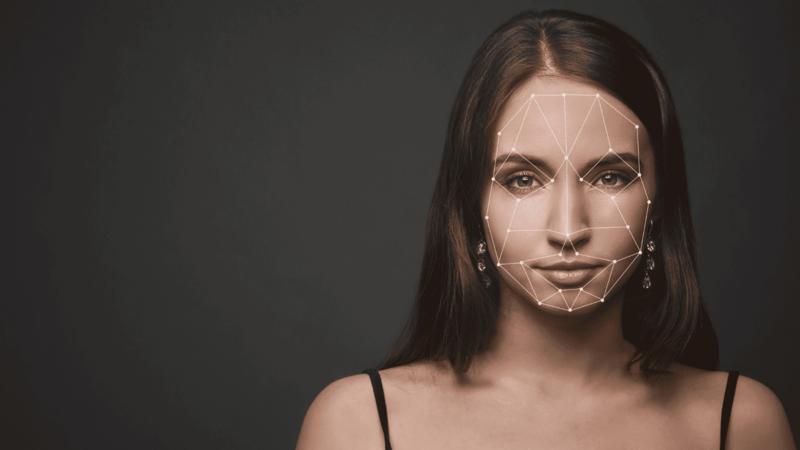
Upload one clear photo and our AI identifies your face shape in seconds, with a confidence score for all six types. No measuring, no guessing, no sign-up.
Built by Michael Machatschek. How the model was built and tested
Cheekbones widest, softly tapered jaw
Your face shape in three steps
Upload a photo
Use a clear, front-facing image with good lighting. Keep hair away from your face and avoid strong shadows.
AI analyzes proportions
The algorithm detects facial landmarks and compares ratios between your forehead, cheekbones, jawline, and face length.
Get your result
See your face shape plus confidence scores, so you know whether you are a clear match or a blend of types.
Face shape types
Most people fall into one main category based on forehead, cheekbone, and jaw width plus face length (Farkas, 1994). Many faces blend two types, which is why we show confidence scores.

Oval Face Shape
Well-balanced: slightly longer than wide, cheekbones widest, jawline softly narrows. The most versatile shape for styling.
Learn more
Round Face Shape
Similar width and length with softer curves and fuller cheeks. Styling focuses on adding length and definition.
Learn more
Square Face Shape
Forehead, cheekbones, and jaw similar in width with a strong, angular jaw. Style to soften or highlight the structure.
Learn more
Oblong Face Shape
Noticeably longer than wide with straight sides and uniform width. Styling aims to add horizontal balance.
Learn more
Heart-Shaped Face
Wider forehead and cheekbones narrowing to a smaller chin, often with a widow's peak. Style to balance top and bottom.
Learn more
Diamond Face Shape
Cheekbones are the widest point with a narrower forehead and jaw, creating an angular, sculpted look.
Learn moreWhat your face shape helps with
Once you know your face shape, styling gets easier. Choose haircuts, glasses, and makeup that create balance, without trial and error.
Hairstyles for your face shape
The right haircut balances your proportions, adding height, softening angles, or creating width. Styles for men and women.
Glasses that suit your face
Frames work best when they contrast your natural structure. Find shapes that complement your face for a balanced look.
Makeup and contouring
Face shape guides where contour and highlight look most natural, adding definition or softening angles.
How face shape is determined
Face shape comes from four proportions, using standardized points from craniofacial anthropometry (Farkas et al., 2005).
Forehead width
Across the widest part of the forehead, around the temples.
Cheekbone width
Across the cheekbones, usually the widest point on oval and diamond faces.
Jawline width
Across the jaw, key for square, heart, and diamond shapes.
Face length
From hairline to chin, key for telling oblong from round or oval.
Automated face shape calculator
Our analyzer uses a Swin Transformer model (Liu et al., 2021), a state-of-the-art computer vision architecture, to detect facial landmarks and calculate proportional ratios based on established anthropometric standards (Farkas, 1994). Because many people sit between two categories, we show confidence percentages so you can see whether you are a clear match or a blend.
Frequently asked questions
Ready to find your face shape?
Upload one photo and get your result in seconds, free and private.
Detect my face shapeReferences
- Farkas, L.G. (1994). Anthropometry of the Head and Face (2nd ed.). Raven Press.
- Farkas, L.G., Katic, M.J., & Forrest, C.R. (2005). International anthropometric study of facial morphology in various ethnic groups/races. Journal of Craniofacial Surgery, 16(4), 615-646.
- Liu, Z., Lin, Y., Cao, Y., Hu, H., Wei, Y., Zhang, Z., Lin, S., & Guo, B. (2021). Swin Transformer: Hierarchical Vision Transformer using Shifted Windows. ICCV, 10012-10022.
- Milady (2022). Milady Standard Cosmetology (14th ed.). Cengage Learning.