Face Shape Detector
Upload a clear photo and our AI will identify your face shape in seconds. No measuring, no guessing, no sign-up.
Your image is processed securely and deleted automatically after analysis.
Face Shape Types
Most people fall into one main face shape category based on the relationship between forehead width, cheekbone width, jawline shape, and overall face length. Many faces are a blend of two types, which is why our analyzer also shows confidence scores.

Oval Face Shape
Oval faces are well-balanced: the face is slightly longer than it is wide, the cheekbones are often the widest point, and the jawline softly narrows toward the chin. This is one of the most versatile face shapes for hairstyles and glasses.
- • Face length slightly longer than width
- • Cheekbones often the widest point
- • Softly tapered jawline

Round Face Shape
Round faces have a similar width and length, with softer curves and fuller cheeks. The jawline is usually gently rounded rather than angular. Styling often focuses on creating a bit more visual length and definition.
- • Face width and length are similar
- • Fuller cheeks and softer contours
- • Rounded jawline

Square Face Shape
Square faces are defined by structure: the forehead, cheekbones, and jawline tend to be similar in width, with a strong, angular jaw. Many people choose styles that soften the angles or highlight the bold definition.
- • Strong, defined jawline
- • Similar width at forehead and jaw
- • Angular facial structure

Oblong Face Shape
Oblong (or rectangular) faces are noticeably longer than they are wide, with relatively straight sides and a more uniform width from forehead to jaw. Styling typically aims to add balance by creating visual width.
- • Face length is significantly longer than width
- • Similar width at forehead, cheeks, and jaw
- • Straighter sides and longer vertical proportions

Heart-Shaped Face
Heart-shaped faces are wider at the forehead and cheekbones and narrow toward a smaller chin. Many have a visible widow’s peak. Styling usually focuses on balancing the upper face with the lower half.
- • Wider forehead and cheekbones
- • Narrower, more pointed chin
- • Often a widow’s peak hairline

Diamond Face Shape
Diamond faces are all about cheekbones: they’re the widest point, while the forehead and jawline are narrower. This creates a more angular, sculpted look that can be emphasized or softened depending on style choices.
- • Cheekbones are the widest point
- • Narrower forehead and jawline
- • More angular, defined structure
How to Determine Face Shape
Face shape is determined by comparing key facial proportions—mainly forehead width, cheekbone width, jawline width, and overall face length. The goal isn’t “perfect geometry,” but a clear understanding of what features dominate your structure.
Forehead Width
Measured across the widest part of the forehead—often around the temples or outer brow area.
Cheekbone Width
The distance across your cheekbones—usually the widest point in oval and diamond face shapes.
Jawline Width
Measured across the jaw—especially important for identifying square, heart, and diamond shapes.
Face Length
The vertical distance from hairline to chin—key for distinguishing oblong vs. round/oval shapes.
Automated Face Shape Calculator
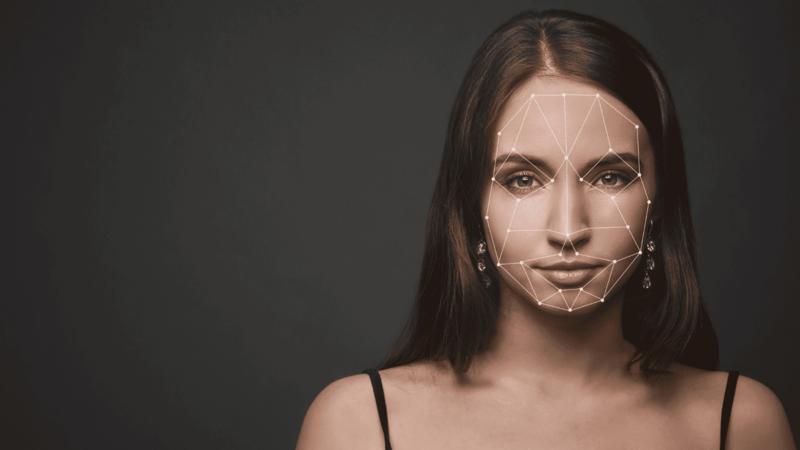
Our face shape analyzer uses computer vision to detect facial landmarks (hairline, temples, cheekbones, jaw angles, and chin). It then calculates proportional ratios and matches them to common face shape patterns. Because many people sit between two categories, we show confidence percentages—so you can see whether you’re a clear match or a blend.
What Face Shape Analysis Helps With
Once you know your face shape, styling gets easier. You can choose haircuts, glasses, and makeup techniques that create better balance—without trial and error.
Makeup and Contouring
Face shape influences where contour and highlight look most natural. Learn the placements that add definition, soften angles, or create a more balanced appearance.
How the Face Shape Analyzer Works
Upload a photo, let the AI analyze your proportions, and get your face shape result instantly.
Upload a Photo
Use a clear, front-facing image with good lighting. For best accuracy, keep hair away from your face and avoid strong shadows.
AI Analyzes Proportions
The algorithm detects facial landmarks and compares ratios between your forehead, cheekbones, jawline, and face length.
Get Your Result
See your face shape plus confidence scores, so you know whether you’re a clear match or a mix of multiple types.
Frequently Asked Questions
Quick answers about face shape analysis, photo requirements, and how the AI works.
Related Articles
Want to go further? These guides help you use your face shape for better style decisions.
Which Face Shape Do I Have?
A practical guide to face shape types and how to identify yours—even if you're between two categories.

Glasses for Your Face Shape
Frame styles that balance your features—plus the common mistakes that make glasses look “off.”

Hairstyles by Face Shape
Haircuts and styling ideas designed to flatter your face shape—without forcing you into one “rule.”